
Media Center (65)
Based on the brochure prepared by Women Fund “Sukhumi” - “Women’s Experiences of Different Forms of Violence” - a video has been created that brings together the stories of three women.
The video presents the experiences of Ana, Lia and Tea, clearly illustrating that violence against women manifests in different forms - including psychological pressure, physical aggression, and situations where a woman seeks help but the system fails to provide effective protection.
The video aims to support the recognition of different forms of violence, raise awareness on the issue, and highlight the importance of support for women.
The project is implemented with the support of the organization Brot
für die Welt - Evangelischer Entwicklungsdienst (Germany)
The video From Research to Action shows how the needs identified through the research conducted by the Women’s Fund “Sukhumi” were transformed into concrete civic initiatives. In this process, the voice of the community itself was especially important - each initiative was developed based on the needs, experiences, and visions of local residents.
The video illustrates how research was turned into action, and how the community became the main driver of change. The common goal of the initiatives was to mitigate the consequences of migration through local engagement and to create a support environment tailored to people’s needs.
The project is implemented with the support of the organization Brot
für die Welt - Evangelischer Entwicklungsdienst (Germany)
When a woman has knowledge, support, and opportunity, she creates change that affects the entire community.
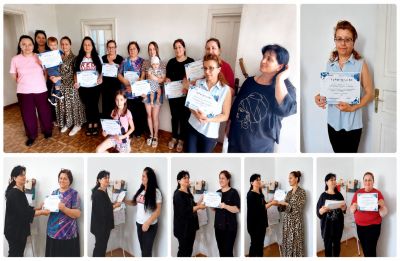
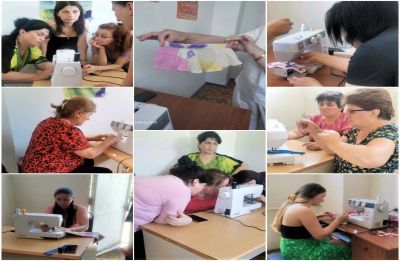
This video tells real stories of women from Georgia who learned new professions, started their own businesses, and took steps toward economic independence with the support of the Fund “Sukhumi.”
A strong woman should not be an exception, it should be the norm.
The project is implemented with the support of Brot für die Welt – Evangelischer Entwicklungsdienst (Germany)
Economic control is a form of abuse in which a person is gradually deprived of financial independence and freedom of choice. In today’s digital reality, this control is often exercised through technology — by monitoring digital payments, accessing financial accounts, and controlling online communication.
“From that day on, my money was no longer mine.
My right to choose slowly disappeared, and care turned into control.”
This is economic control — one of the most invisible yet most painful forms of technology-facilitated violence.
It may leave no visible marks, but it deeply undermines a person’s dignity, autonomy, and sense of safety.
This project is implemented with the support of the WAVE Network
Image-based abuse is a severe form of technology-facilitated violence that often begins under the guise of love and trust.
“At first, everything seemed to start with love — „Send me a photo, it will be just for me“… but that trust turned into fear, threats, and emotional abuse,” — Lika, 23
Threats to share private images or intimate content without consent are used as tools of control, intimidation, and power.
Trust is not a crime.
The crime is abusing that trust.
This project is implemented with the support of the WAVE Network
Keti’s story highlights one of the most widespread and often overlooked forms of technology-facilitated violence — cyber surveillance.
What initially appeared to be an act of care through location sharing gradually turned into constant monitoring of Keti’s daily life. Her movements were closely tracked — where she went, who she met, when she returned, and why she would “disappear” from the map.
What was framed as concern and protection ultimately became a mechanism of control.
This is not love.
This is not care.
This is control — a form of technology-facilitated violence.
If this experience feels familiar, know that you are not alone.
Technology-facilitated violence is real, and recognizing it is the first crucial step toward freedom and safety.
This project is implemented with the support of the WAVE Network
Technology-facilitated violence against women (TFVAW) often begins invisibly — within everyday digital communication, through access shared in the name of “trust,” and the gradual normalization of control in intimate relationships.
The video presents the real story of Tamar. Her testimony illustrates how sharing passwords, restricting personal space, and constant questioning in a partnership may initially be perceived as expressions of love, but over time transform into mechanisms of control and sources of lost freedom.
“I shared my passwords because I thought that was how trust was built. From that day on, my life no longer belonged to me. Questions, restrictions, control — all in the name of love. And slowly, I began to lose myself,” — Tamar.
Technology-facilitated violence against women and girls is often invisible, yet its consequences are real and severe. It limits personal autonomy, undermines a sense of safety, and erodes self-identity.
If there is a feeling that someone is controlling your digital space, this is an important warning sign. A relationship should never require the surrender of personal freedom.
Freedom should never be negotiable.
This project is implemented with the support of the WAVE Network
Digital abuse is no longer invisible.
It happens when a partner uses phones, social media, location tracking, or any digital tools to control, monitor, intimidate, or threaten you.
The first signs are often subtle - “Give me your password,” “Show me your messages,” “Why weren’t you online?”
But the outcome is the same: loss of personal boundaries.
Project implemented by the Women’s Fund “Sukhumi” with support from the WAVE Network.
Sukhumi Fund’s innovative project is already assisting hundreds of women across 10 municipalities in Western Georgia.
Paraprofessionals are not psychologists or social workers, yet they form the first line of support in the community.
Watch the feature to see how paraprofessionals contribute to social work in preventing domestic and gender-based violence.
Behind women’s migration lie real experiences – poverty, bank debts, domestic violence, and unpaid labor.
A new study by the Fund “Sukhumi,” conducted in 11 municipalities of Western Georgia, shows that:
- 67% of surveyed women have thought about leaving the country at least once;
- 30% are already actively considering migration.
These figures are not just statistics. They reflect the difficult choices women are facing.
See the full study here: https://fsokhumi.ge/index.php/en/publications/gender-based-violence/item/15771-why-do-women-leave
The project is implemented with the support of the organization Brot
für die Welt - Evangelischer Entwicklungsdienst (Germany)