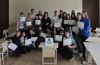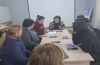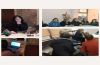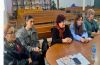
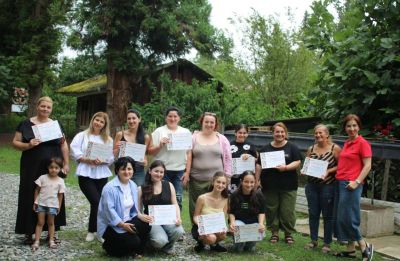
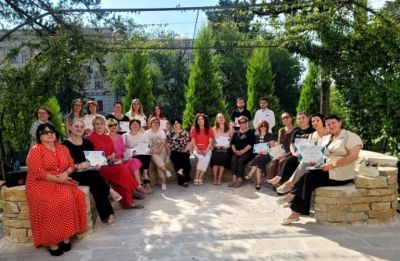
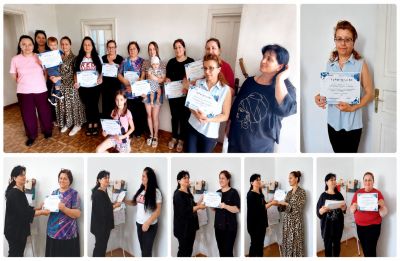
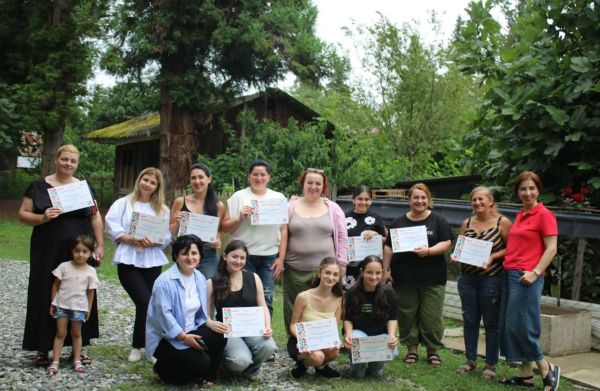
A basic makeup artistry course has been completed in the Kombinati settlement of Zugdidi. The training began on 13 July and aimed to develop women’s practical professional skills and support their economic empowerment.
Local women, including young mothers, participated in the course. Acquiring a new profession creates opportunities for their employment and self-employment.
During the training, the participants gained basic theoretical knowledge and practical skills in makeup artistry and took their first steps towards professional activity.
The experience will allow them to continue their education through an advanced course, further develop their practical skills and turn makeup artistry into a source of income.
Access to vocational education and support for women’s economic independence are essential to their empowerment and the creation of new opportunities in life.
The project is implemented with the support of CISU
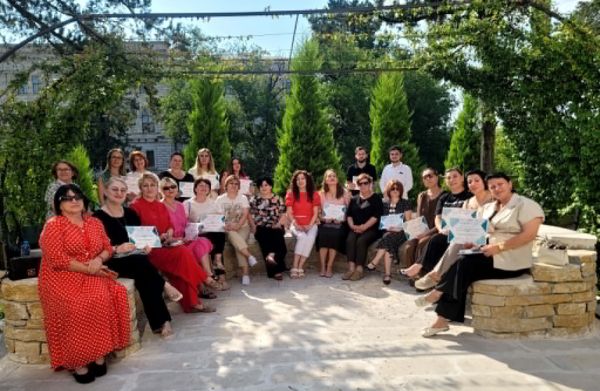
On 25 July, a training entitled “The Role of Teachers in Trauma-Informed Communication and Support for Women Survivors of Domestic Violence” was held at Gelati Residence Hotel in Kutaisi. The event brought together 21 teachers from the municipalities of Kutaisi, Khoni, Tskaltubo, Senaki, and Zugdidi.
During the training, participants explored the dynamics of domestic violence, the impact of trauma, the principles of trauma-informed communication, referral mechanisms, and the role of education professionals in responding to cases of violence. The programme combined theoretical sessions with practical case studies and interactive group work.
Participants expressed particular interest in the topic of online violence, highlighting its growing relevance in educational settings. They noted that the knowledge and practical tools gained during the training would be directly applicable to their daily professional work, while the analysis of real-life cases made the learning process especially valuable and practice-oriented.
The project is implemented with the support of CISU
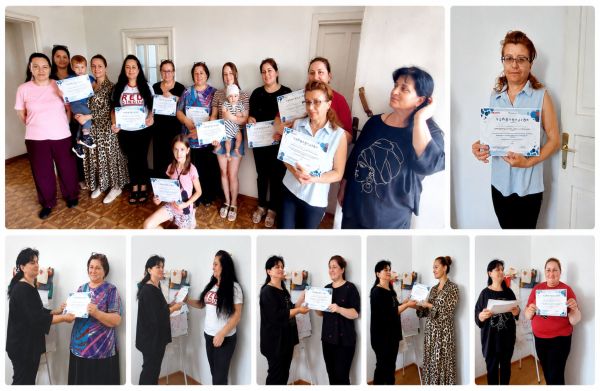
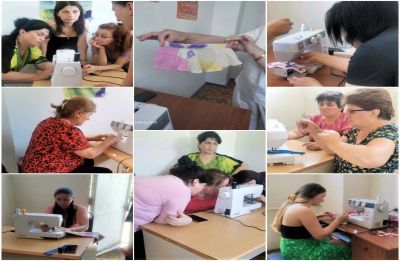
A basic one-month cutting and sewing course has been completed in the Kopitnari settlement within the framework of the Danner project. The aim of the course was to develop women’s practical skills and support their economic empowerment.
During the month, participants learned basic sewing techniques, worked on practical assignments, and created their first handmade items. At the end of the course, they were awarded certificates.
According to the participants, the course was not only about gaining a professional skill. It was also an opportunity to gain more confidence in their own abilities, discover a new interest, and think about how the knowledge they acquired could contribute to their personal and economic empowerment in the future.
“At first, I thought I would not be able to do it, but when I saw something I had sewn with my own hands, I discovered a new strength in myself,” said one of the participants.
Similar activities planned within the project help strengthen women’s self-confidence, develop practical skills, and expand their opportunities at the local level.
The project is implemented with the support of CISU
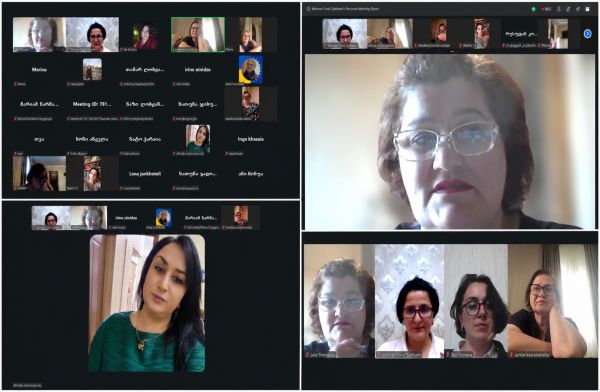
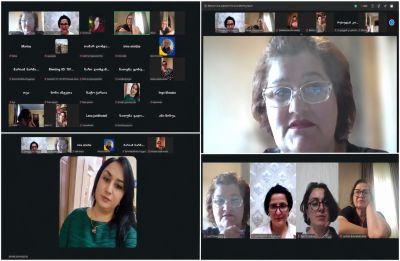
Women Fund “Sukhumi” held a joint online information meeting on the topic: “Trauma-Informed Approaches in the Context of Domestic Violence.”
The meeting brought together representatives of 10 municipalities. Participants summarized the knowledge gained during the workshops, shared practical experience, and discussed how trauma-informed approaches can be used in the process of supporting women who have experienced violence.
During the discussion, it was emphasized that a trauma-informed approach is not only about empathy. It is a way of better understanding a woman’s experience, fear, silence, complex reactions, and decisions. According to the participants, this knowledge helps specialists and community representatives create more safety and less judgment when working with women affected by violence.
Participants also noted that, after the workshops, it became clearer why a woman may not be ready to speak during the first meeting, why asking for help can be difficult, and how important trust-based communication is in the support process.
The meeting also highlighted key needs at the local level: wider introduction of trauma-informed approaches, strengthening of services, capacity building for specialists, and development of network-based cooperation.
Participants underlined that such spaces are important for sharing experience, identifying common challenges, and developing more effective practices for supporting women.
The project is implemented with the support of CISU
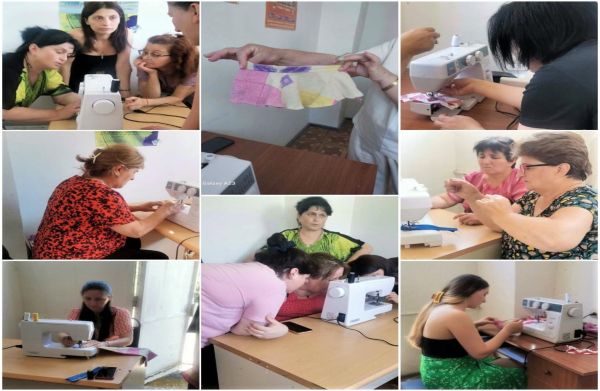
A sewing course for women has started in Kopitnari settlement, Tskaltubo Municipality.
The course gives participants the opportunity to learn a new practical skill, gain professional experience and become part of a space that, alongside learning, also offers opportunities for communication, self-expression and empowerment.
During the first meeting, the participants were introduced to the aim of the course, the working process and the main topics they will gradually study over the coming weeks. The meeting was held in a warm and productive atmosphere. The participants expressed interest, curiosity and a clear desire to turn new knowledge into real opportunities.
Sewing is not only a technical skill. At first glance, it begins with a needle, thread and fabric, but often it means much more — gaining new experience, building confidence in one’s abilities and developing a clearer vision for the future.
Courses of this kind are especially important for women who need support, the development of new skills and practical steps towards social and economic empowerment.
Over the next few weeks, the participants will gain new knowledge, engage in practical work, share experiences and, perhaps, discover opportunities that at the beginning of the course existed only as expectations.
The project is implemented with the support of CISU
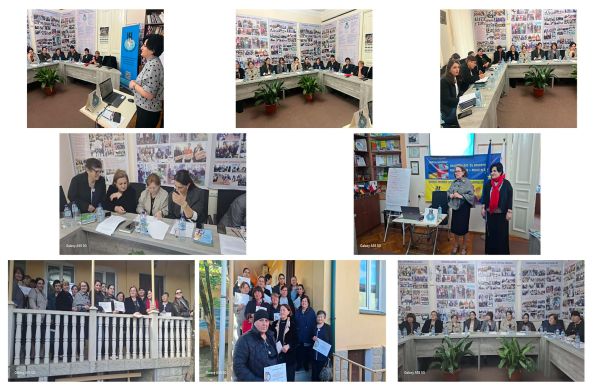
On May 6, in Kutaisi, the Charity Humanitarian Women Fund “Sukhumi” organized a training for medical personnel on the topic: “The Role of Medical Personnel in Trauma-Informed Communication and Support for Women Survivors of Domestic Violence.”
The training brought together 20 medical professionals - doctors and nurses from Kutaisi, Tskaltubo, Khoni, Senaki, and Zugdidi.
The main goal of the meeting was to raise awareness among medical personnel about trauma-informed approaches, sensitive communication, and response mechanisms in cases of domestic violence. Participants discussed the impact of stereotypical attitudes, the emotional state of women after trauma, and how the first contact with medical personnel can become the beginning of support and a sense of safety for women.
One of the important parts of the training was dedicated to the referral mechanism. Within the block facilitated by Ema Kamkia, participants discussed the roles of the actors involved in the referral process, the responsibilities of medical personnel, documentation issues, cooperation with relevant agencies, and risk assessment mechanisms.
The block on trauma-informed communication was facilitated by Khatuna Gogua. Participants worked on how communication with a woman survivor of violence should be conducted in a way that does not deepen her fear, shame, or sense of insecurity.
During the discussion, participants noted that referral documentation should be more compact and practical, so that it can be used more effectively in real working environments and does not create additional discomfort either for the survivor or for medical personnel.
“We, doctors, have never participated in trainings on such topics before. We received information that is not only important, but necessary for our work,” one of the participants noted.
“We are leaving emotionally and informationally enriched. We reflected on our own responsibility. In our practice, we often come into contact with women survivors of violence, and communication with them is especially important,” said another participant.
At the end of the meeting, participants emphasized the importance of sharing experience and gaining practical knowledge. The training once again highlighted that, when working with women survivors of violence, the role of medical personnel is not limited only to diagnosis and treatment — it is also connected to women’s safety, trust, and support.
The project is implemented with the support of CISU
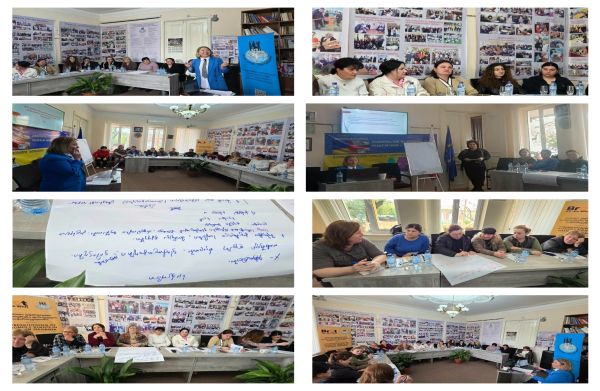
In Kutaisi, Ekaterine Gamakharia, Head of the Tbilisi Representative Office of the Charity Humanitarian Women Fund “Sukhumi”, conducted a training on the topic: “Trauma-Informed Approach and Understanding the Dynamics of Violence in Working with Women Survivors of Violence.”
The training brought together para-specialists and community leaders who work with women survivors of violence in their daily practice. The aim of the meeting was to strengthen participants’ capacity to apply a trauma-informed approach and to deepen their understanding of the dynamics of violence.
During the training, participants discussed the social roots of violence, the influence of gender norms and stereotypes, violence as a system of control, the cycle and spiral of violence, as well as the impact of trauma on women’s behavior and decision-making.
Special attention was given to practical cases, group work, and the principles of trauma-informed communication. Participants reflected on how women’s reactions and behavior can be understood within the context of trauma, and how to create a safe, non-judgmental space in the support process.
The meeting once again highlighted that working with women survivors of violence begins with understanding, sensitive communication, and recognizing the experiences that affect women’s decisions and emotional state.
The project is implemented with the support of CISU
Retreat is a working meeting, a psychological and physical recharge, a vacation that will be pleasantly remembered by everyone.
The Fund “Sukhumi” staff spent three days with their families at “Borjomi Palace” Hotel (mostly there were children: kind, beautiful, and talented).
There were excursions to the Rabati Fortress, the Cathedral of St. Seraphim of Sarov, the Cathedral of St. George in the village of Sadgeri, and walks through Borjomi Park and the streets.
While working with psychologist Inna Ayrapetyan, the participants sought answers to the following questions: What is our current state? What factors negatively impact us? What can we influence? What can we change? Where can we find new strength and resources?
Of course, we "discovered" many internal resources, created and deciphered their "internal" and "external" masks, mastered new "self-defense" techniques, better understood each other, thought, cried, and laughed...
At the end, the children surprised us: they showed a scene from the forum-theater, danced, and recited poetry...
We realized: the resources are within us, in our families, and also in the beneficiaries, in those whom this organization helps, whom it tries to support for almost 30 years...
The project is implemented with the support of the organization Brot
für die Welt - Evangelischer Entwicklungsdienst (Germany)
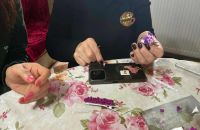
Women with difficult experiences come to the rehabilitation center: unresolved trauma, long-term stress, hopelessness, low self-esteem, and difficult social situations. However, behind these difficulties lies the ability to fight and faith in a better future.
In order to strengthen their faith, we offered the women a polymer clay master-class led by the trainer - Maka Jishkariani. The creative process was more than just a craft—it was a therapeutic experience, allowing them to discover their own abilities and activate their inner resources.
The workshop participants showed great interest. Each of them demonstrated natural talent and a great desire to better learn this direction.
The works created by them were filled with color, emotions and the hope of something new. This day became another step towards the changes.
The project is implemented with the support of the organization Brot
für die Welt - Evangelischer Entwicklungsdienst (Germany)